The pipeline is autonomous. The judgment is not.
Autonoma Intelligence uses autonomous research systems to monitor how agentic AI is changing enterprise learning, workforce development, HR systems, knowledge work, and the governance structures around them.

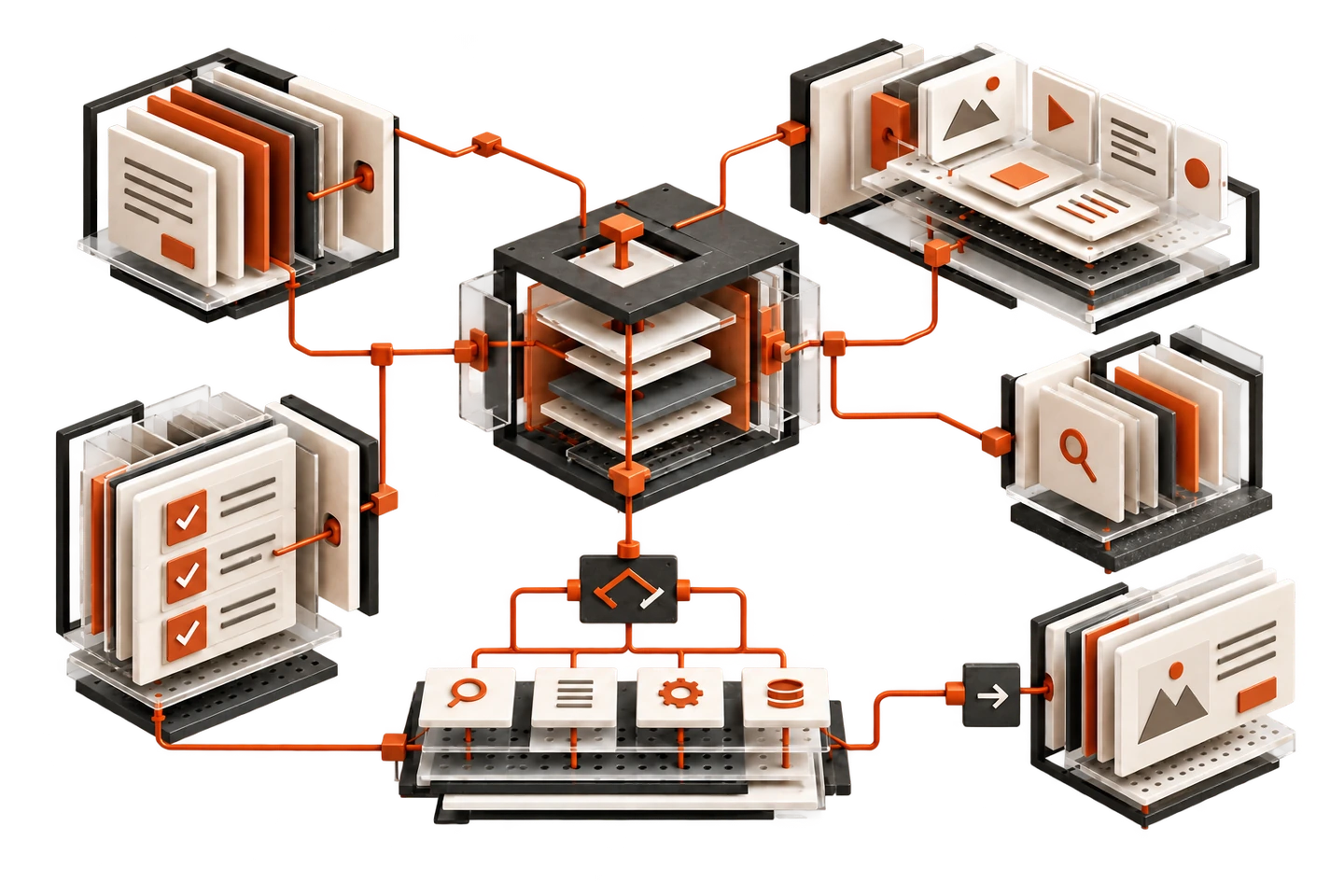
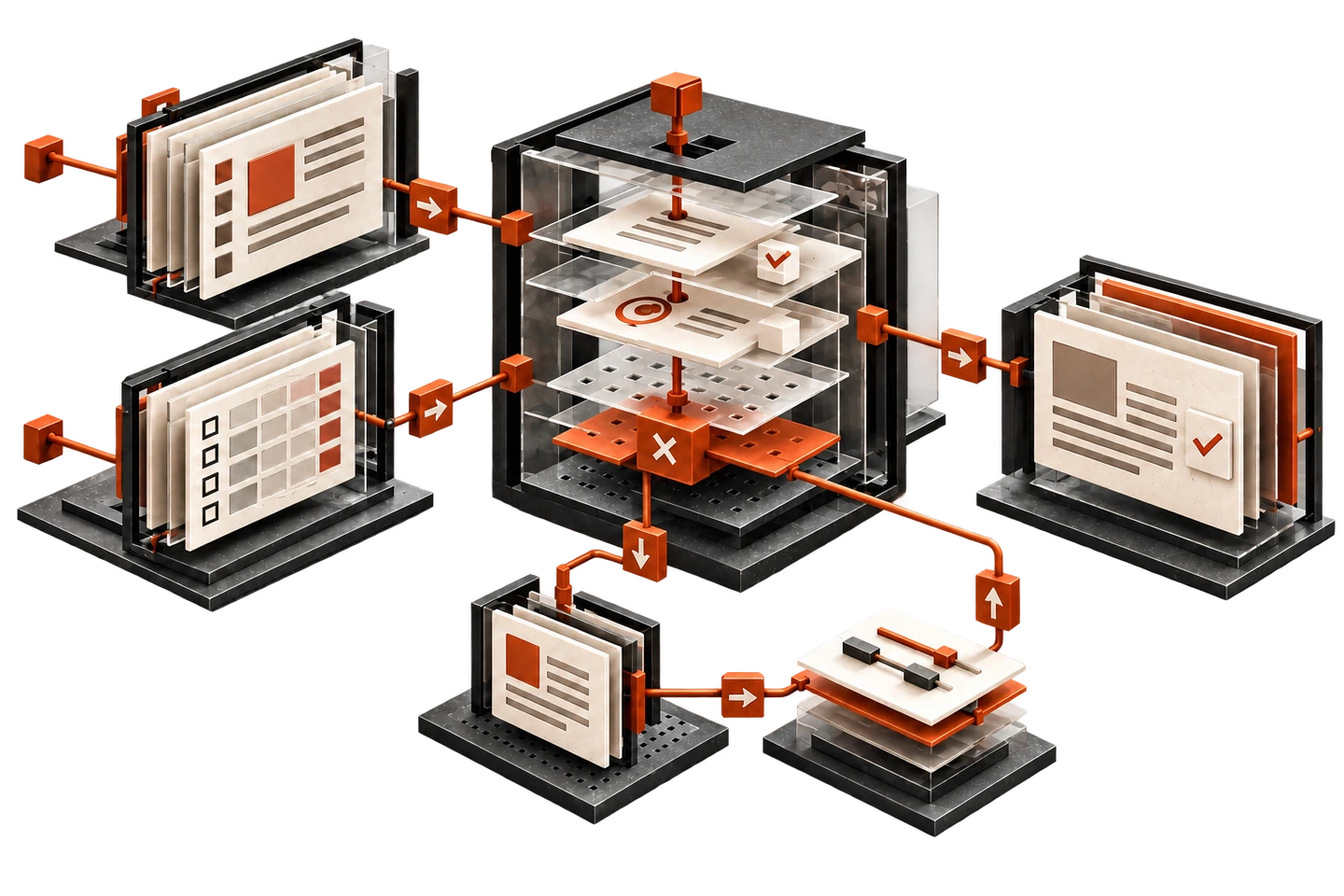
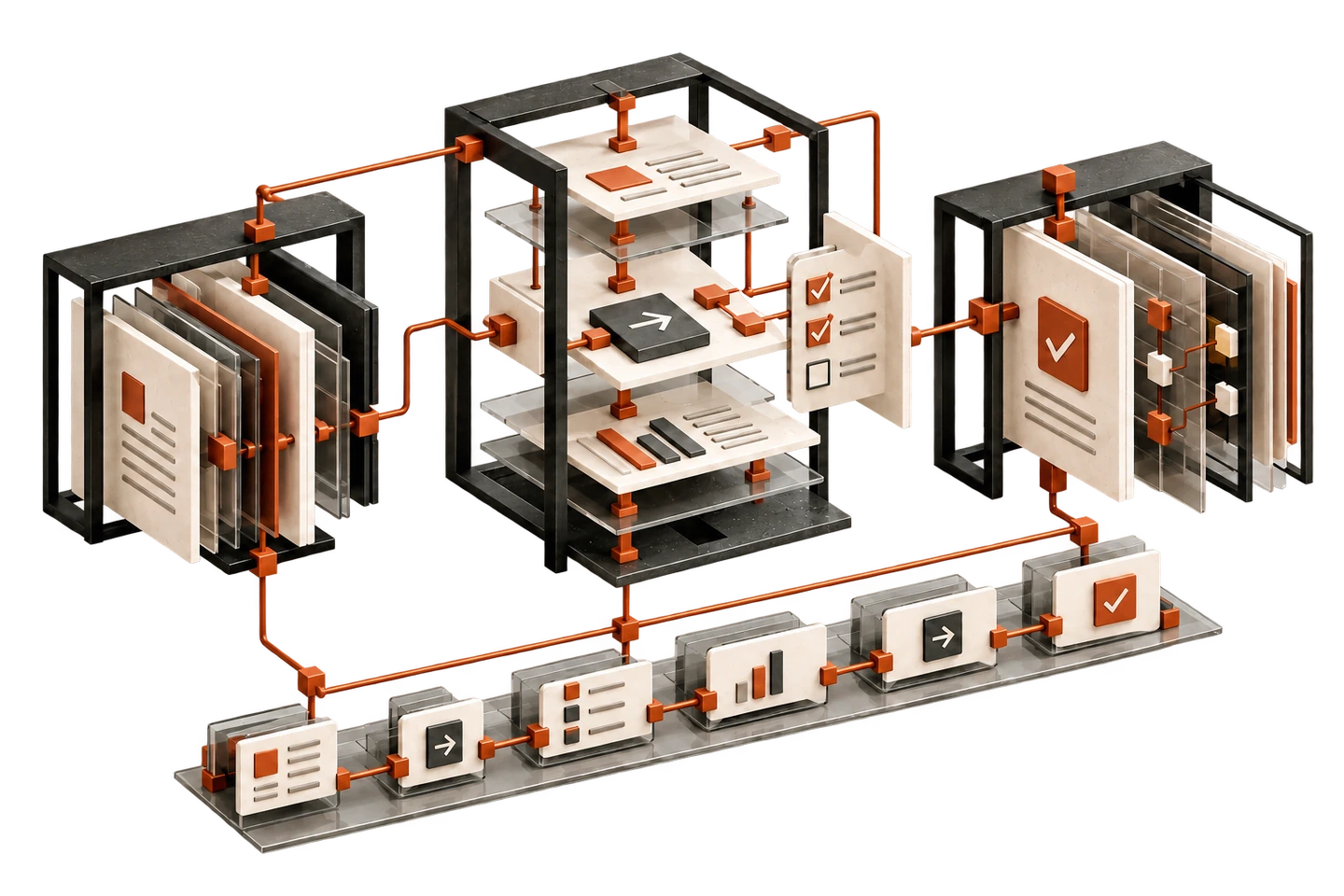
The machine can search, retrieve, cluster, compare, challenge, and surface signals at a scale no individual editor could match. But publication is not delegated to the machine.
Every brief is selected, edited, reviewed, and signed by a human editor. The system may accelerate intelligence work. It does not replace editorial judgment.
Our standard is simple:
That is the operating contract behind every published brief.
Sourced.
Every material claim must trace back to a source.
A claim is not publishable because it is plausible, interesting, popular, or model-generated. It is publishable only when the editorial process can identify where it came from, what supports it, and how much confidence the reader should place in it.
For each brief, Autonoma maintains a source trail that records:
- the sources used;
- the claims those sources support;
- whether a source is primary, supporting, contested, weak, or background;
- which claims were rejected, narrowed, caveated, or held;
- whether a claim is ready for publication or still requires verification.
References at the end of a brief are the visible layer. The internal standard is stricter: every load-bearing claim should be traceable through the editorial record.
When the evidence is thin, we say so. When a source is vendor-produced, self-interested, preliminary, or methodologically limited, we treat it accordingly. When a claim depends on a single source, we do not pretend it has broad evidentiary support.
Adversarial.
Every brief is challenged before it ships.
Autonoma does not treat a coherent narrative as sufficient evidence. The editorial process actively looks for contradiction, overstatement, vendor capture, weak sourcing, population mismatch, timing problems, and claims that sound stronger than the underlying evidence allows.
The adversarial review asks:
- What would make this claim false?
- Is the evidence independent or self-interested?
- Is the claim broader than the source supports?
- Are we confusing vendor intent with market reality?
- Are we treating a pilot, forecast, survey, or anecdote as proof?
- Are we using one domain’s evidence to make another domain’s argument?
- Are we hiding uncertainty because it weakens the story?
Contradictions are not smoothed away for narrative convenience. They are used to sharpen the brief.
If a claim survives adversarial review, it may become part of the argument. If it does not, it is narrowed, caveated, moved to background, or removed.
Edited.
A human editor reads, revises, and signs every brief before publication.
Autonoma uses autonomous systems for discovery, retrieval, clustering, evidence comparison, contradiction detection, and draft support. Those systems do not have final editorial authority.
A human editor is responsible for:
- selecting the brief topic;
- deciding which claims are load-bearing;
- removing claims that are overstated or weakly supported;
- preserving uncertainty where uncertainty matters;
- checking whether the brief’s argument matches the evidence;
- ensuring the final piece is useful to decision-makers, not just technically impressive;
- approving the final published version.
No brief is published solely because an automated system generated it.
The editorial voice is human. The accountability is human. The signature is human.
Auditability.
Every brief should be auditable by a serious reader.
Autonoma’s public audit packet exists to make the editorial process inspectable without exposing private notes, raw prompts, internal identifiers, or sensitive system details.
A public audit packet may include:
- a claim register;
- a source ledger;
- adversarial review notes;
- editorial signoff;
- correction history;
- source caveats;
- claims that were held, narrowed, or excluded;
- evidence limits that shaped the final brief.
The audit packet is not a performance artifact. It is part of the editorial product.
Readers should be able to see not only what Autonoma concluded, but how the brief earned the right to make that conclusion.
Use of autonomous systems.
Autonoma uses autonomous systems as research infrastructure.
Those systems may:
- monitor sources;
- retrieve documents;
- cluster emerging signals;
- compare claims across runs;
- identify contradictions;
- detect stale evidence;
- pressure-test source quality;
- recommend follow-up verification;
- generate draft structures or evidence packets;
- assist with audit preparation.
Those systems may not independently:
- publish a brief;
- promote a claim to final editorial status;
- silently rewrite a published correction;
- treat raw graph or model-generated context as evidence;
- override human editorial judgment;
- change the public record without review.
Automation expands the surface area of inquiry. It does not dissolve accountability.
Evidence standards.
Autonoma distinguishes between signal, support, and proof.
Not every interesting finding belongs in a brief. Not every source can carry a claim. Not every claim that is directionally true is safe to publish as written.
The editorial process separates:
- Load-bearing claims — claims that support the core argument and require strong evidence.
- Supporting claims — claims that add context but do not carry the argument.
- Pressure signals — emerging patterns that may matter but are not yet final.
- Contested claims — claims with conflicting evidence or unresolved verification issues.
- Held claims — claims that may become usable after further verification.
- Excluded claims — claims that are too weak, overstated, stale, or source-dependent to use.
The brief should make clear when a topic is mature, when it is emerging, and when the evidence is still unstable.
Independence.
Autonoma is not a vendor marketing channel.
Enterprise AI is full of claims made by vendors, platforms, consultants, analysts, researchers, investors, and internal champions. Some of those claims are useful. Some are inflated. Some are true in one context and misleading in another.
Autonoma may cite vendor-produced material when it is relevant, but vendor claims are not treated as neutral evidence by default.
Where possible, claims should be checked against independent research, primary documentation, customer evidence, regulatory material, technical analysis, public filings, or multiple unrelated sources.
When independence is not available, the brief should say so.
Scope.
Autonoma focuses on agentic AI in enterprise learning and the workforce systems around it.
That includes:
- corporate learning and L&D;
- workforce transformation and upskilling;
- LMS, HRIS, IAM, GRC, and adjacent enterprise systems;
- knowledge management and internal operations;
- governance, identity, security, and auditability for AI agents;
- organizational consequences of delegating work to autonomous systems.
Autonoma does not try to cover every AI development. It follows the parts of agentic AI that change how enterprises train people, govern work, assign authority, measure capability, and control risk.
Reader standard.
Autonoma briefs are written for decision-makers.
A useful brief should help a reader understand:
- what changed;
- why it matters now;
- what evidence supports it;
- what is still uncertain;
- what decision or question it should affect.
The goal is not volume. The goal is compressed judgment.
The brief should be clear enough for a busy executive, rigorous enough for an operator, and honest enough for a skeptical reader.
Publication standard.
A brief should not publish until it clears four gates:
- Source gate — the load-bearing claims are traceable.
- Adversarial gate — the core argument has been challenged.
- Editorial gate — a human editor has reviewed and signed the brief.
- Correction gate — the public record can be corrected if the evidence changes.
If a brief fails one of these gates, it should be held.
Publishing later is better than publishing something unsupported.
Our promise.
Autonoma Intelligence will not ask readers to trust the machine.
It will ask readers to inspect the work.
Every brief should make a clear argument, show its evidence, expose its caveats, and preserve the record when something changes.
The standard is not automation for its own sake.
The standard is accountable intelligence.
Sourced. Adversarial. Edited. Auditable.
The System of Record Has No Object for the Act
When an agent screens a candidate, approves leave, routes a case, or flags a performance concern, the HR system of record keeps the result. It usually has nowhere to put the actor.
Read the brief →Read Monday’s brief.
Sourced. Edited. Delivered every Monday at 07:00 ET. Free.